
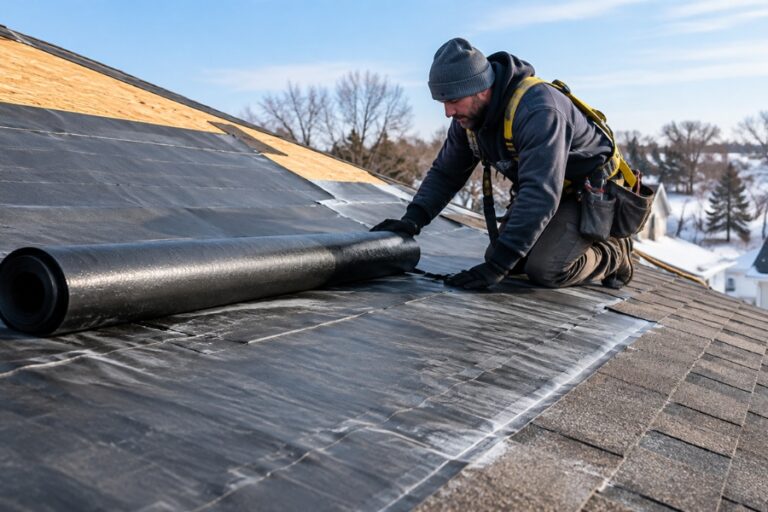
Every homeowner planning a new roof should understand ice and water shield Rochester MN building code requirements before work begins. This protective membrane sits beneath your shingles, and Minnesota law requires it in specific areas of your roof. Brauer Roofing Inc. installs this barrier on every qualifying project, so you can trust that your roof meets code from day one. This guide explains exactly what the code requires, where the material goes, and why it matters so much for your home.
Why Minnesota Code Requires Ice and Water Shield
Minnesota winters create the exact conditions that cause ice dams to form along your roofline. Because of this, the state building code specifically addresses cold-climate roofing protection. The Minnesota Residential Code requires an ice barrier on homes located in regions with a history of ice forming along the eaves, and Rochester falls squarely within that zone.
This requirement exists for a practical reason. When snow melts and refreezes near your roof edge, water can back up underneath your shingles. Without a protective barrier, that water finds its way into your attic and ceilings. Therefore, code officials mandate this membrane rather than leaving it as an optional upgrade.
What Ice and Water Shield Actually Does
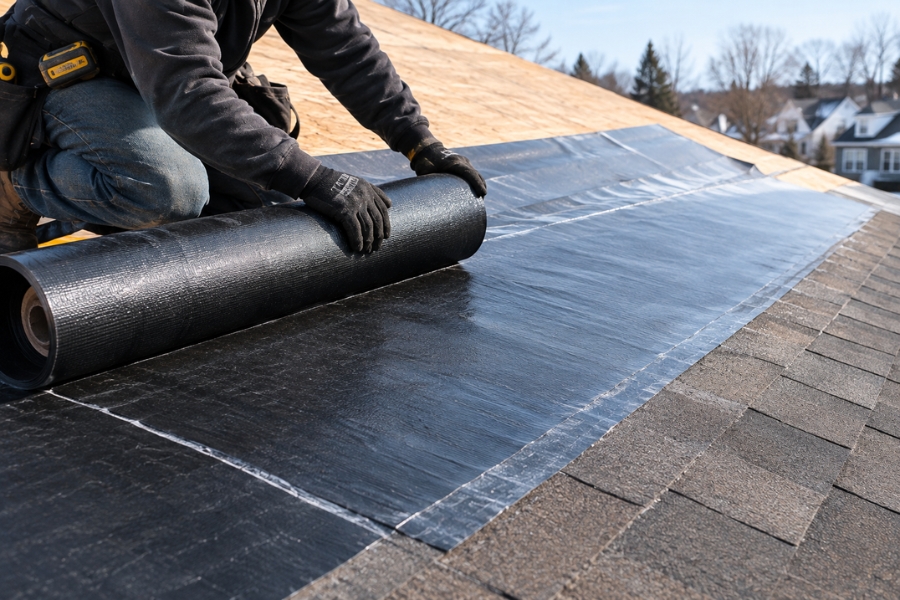
Ice and water shield is a self-adhering membrane made from rubberized asphalt. Once installed, it creates a watertight seal directly on your roof deck, underneath your shingles. As a result, water cannot penetrate through nail holes or seams the way it can with standard underlayment.
This membrane also seals tightly around every nail that punctures it. Consequently, even when ice dams force water backward under your shingles, the membrane keeps your roof deck completely dry. In addition, it protects vulnerable areas like valleys, chimneys, and skylights, where water naturally concentrates during heavy snowmelt.
Where Minnesota Code Requires This Barrier on Your Roof
The Minnesota building code specifies exact locations where ice and water shields must be installed. Understanding these zones helps you evaluate whether a contractor’s proposal actually meets code.
- Eaves: The barrier must extend from your roof’s lowest edge to a point at least 24 inches inside your exterior wall line.
- Valleys: Every valley requires full membrane coverage, since valleys funnel the largest volume of water during snowmelt.
- Steep slopes: Roofs with a slope of 8:12 or greater require coverage extending at least 36 inches from the eave edge.
- Roof penetrations: Chimneys, skylights, and vent pipes each need a waterproof collar to prevent leaks around these openings.
- Low-slope sections: Porch roofs or additions with gentle slopes often need broader coverage, since water moves more slowly across them.
If your contractor skips any of these areas, your roof may fail inspection, and your home may remain vulnerable to costly water damage.
How This Protects You From Ice Dams and Repairs
Ice dams do not simply disappear once winter ends. They often leave behind hidden damage that surfaces months later as stains, mold, or soft spots on your ceiling. Proper ice and water shield installation stops this damage before it ever starts, since the membrane blocks water regardless of how far an ice dam backs up.
Homeowners who deal with recurring Ice Dam Removal often discover that outdated or missing ice barrier material was the underlying issue all along. Correcting this during a roof replacement solves the problem permanently, rather than treating the same symptom every winter. Because the membrane works continuously behind your shingles, you gain protection that never needs seasonal attention.
What Happens When This Requirement Gets Skipped
Some contractors quote lower prices by skipping proper ice and water shield installation, especially in areas the code requires but inspectors rarely check twice. Unfortunately, this shortcut can cost homeowners significantly more down the road. Water damage from an unprotected roof deck often requires extensive drywall, insulation, and structural repairs.
Additionally, skipping this step can affect your shingle warranty, since manufacturers frequently require documented proof of proper underlayment installation. If your roof ever needs Roofing Repair because of water intrusion, your warranty claim may be denied entirely if the original installation did not meet code. For this reason, verifying proper ice and water shield placement protects both your home and your financial investment.
How to Verify Your Roof Meets This Standard
Before hiring any contractor, ask these direct questions to confirm compliance:
- Which areas of my roof will receive ice and water shield coverage?
- Does my roof’s pitch require extended coverage beyond the standard 24 inches?
- Can you show me manufacturer documentation for the membrane you plan to use?
- Will this installation meet current Minnesota Residential Code requirements?
A qualified contractor answers these questions clearly and confidently, without hesitation or vague explanations.
Protect Your Roof the Right Way
Brauer Roofing Inc. follows Minnesota building code on every single installation, ensuring your roof deck stays protected long before winter arrives. Instead of guessing whether your roofing contractor cut corners, you can rely on documented, code-compliant work every time. Call us today at (507) 252-1728 to schedule your roof evaluation and confirm your home has the protection Minnesota winters demand.
Frequently Asked Questions
Is ice and water shield required by law in Minnesota?
Yes, Minnesota Residential Code requires ice barrier installation in regions with a history of ice damming along the eaves, which includes Rochester and most of southern Minnesota.
How much does ice and water shield add to a roof replacement?
Costs vary by roof size and pitch, though the material typically adds a modest amount to your overall project compared to the water damage it prevents.
Can ice and water shield be added to an existing roof without full replacement?
Generally, this membrane must be installed directly on the roof deck, so most homeowners add or upgrade it during a full roof replacement rather than as a standalone repair.
Does every part of my roof need ice and water shield?
No, code targets specific vulnerable areas like eaves, valleys, and penetrations, though your contractor should confirm exact requirements based on your roof’s slope and design.
Does Brauer Roofing Inc. include ice and water shields in every roof replacement?
Yes, Brauer Roofing Inc. installs code-compliant ice and water shield on every qualifying project to ensure your new roof meets Minnesota’s building standards.
