
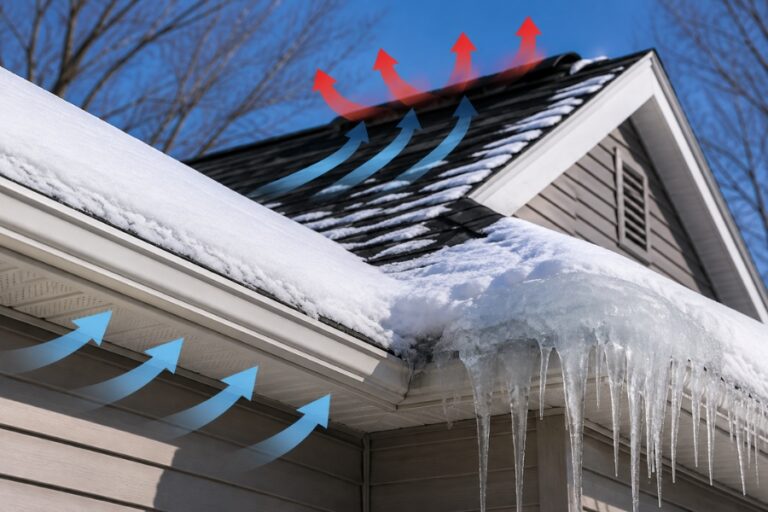
Rochester winters can be tough on residential roofs. Heavy snowfall, freezing temperatures, and repeated freeze-thaw cycles can create conditions that contribute to ice dam formation. While several factors can play a role, proper roof ventilation is one part of a well-balanced attic and roofing system that can help reduce the risk.
Understanding how ventilation works, what causes ice dams, and what warning signs to look for can help homeowners take preventive steps before winter roof problems become more serious.
What Causes Ice Dams to Form?
Ice dams typically develop when different areas of a roof have significantly different temperatures.
Heat from the living space can escape into the attic and warm portions of the roof deck. When snow sitting on those warmer areas begins to melt, the water flows toward colder sections near the roof edges. As the water reaches these colder surfaces, it can freeze and gradually form a ridge of ice.
Once an ice dam develops, additional melting snow may have nowhere to drain. Water can then work its way beneath roofing materials and potentially contribute to moisture damage in the attic, insulation, walls, or ceilings.
Snow itself isn’t necessarily the problem. Uneven roof temperatures, heat loss, insulation conditions, air leakage, and ventilation can all influence how likely ice dams are to develop.
Why Roof Ventilation Matters in Rochester
Rochester, MN experiences extended periods of cold weather, making attic airflow particularly important during winter.
A properly designed attic ventilation system allows outdoor air to move through the attic space. Intake vents, commonly located around soffits, can bring cooler air into the attic, while exhaust vents near the roof’s upper sections allow warmer and more humid air to escape.
This airflow can help maintain a more consistent attic temperature and reduce excessive heat buildup beneath the roof deck.
However, ventilation is only one component of a properly functioning roofing system. Adequate insulation and air sealing are also important because they help prevent excessive heat from escaping from the home’s living areas into the attic.
How Ventilation Can Help Reduce Ice Dam Formation
The basic principle is relatively straightforward: keeping attic conditions more consistent can help reduce the temperature differences that contribute to snow melting unevenly across the roof.
A balanced ventilation system generally includes both intake and exhaust airflow. Cool outside air enters through lower areas, while warmer air exits through higher areas.
For example, soffit vents can provide intake airflow while ridge vents can provide continuous exhaust along the roof’s peak.
When these components work appropriately with the attic’s insulation and air-sealing, they can help create a healthier attic environment and reduce conditions that contribute to moisture accumulation and uneven roof temperatures.
It’s important to remember that ventilation isn’t a guaranteed solution for every ice dam problem. The design of the roof, insulation levels, air leakage, weather conditions, and snow accumulation can all affect the outcome.
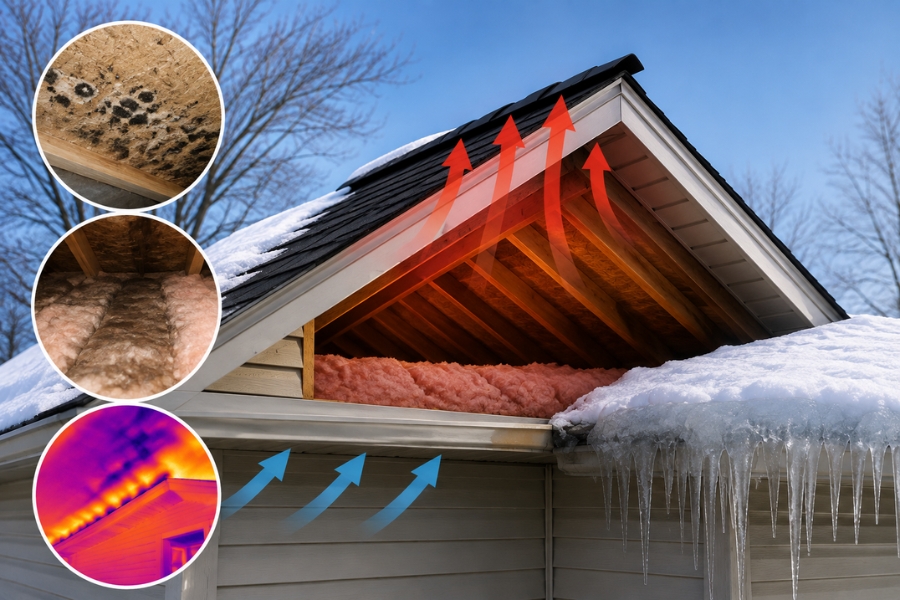
Signs Your Rochester Home May Have Ventilation Problems
Homeowners may notice several signs that indicate their attic environment could use closer attention.
Some potential warning signs include:
- Frost or condensation visible on the underside of the roof deck
- Excessive moisture in the attic
- Musty odors
- Uneven snow melting across the roof
- Icicles forming repeatedly along roof edges
- Peeling paint or moisture staining
- Warped or deteriorated roof decking
These signs don’t necessarily mean that poor ventilation is the only cause. They can point to broader attic moisture, insulation, or roofing concerns.
An inspection can help determine what is actually contributing to the problem before homeowners invest in a particular solution.
The Role of Insulation and Air Sealing
Ventilation works best when it is considered alongside insulation and air sealing.
Warm air from the living areas can enter an attic through small gaps around light fixtures, attic access panels, plumbing penetrations, and other openings. If enough warm air reaches the underside of the roof, it can contribute to higher roof-deck temperatures and moisture problems.
Adequate insulation helps slow heat transfer from the living space into the attic. Air sealing addresses pathways through which conditioned air can escape.
Together, insulation, air sealing, and appropriate ventilation can help create a more stable attic environment throughout the winter.
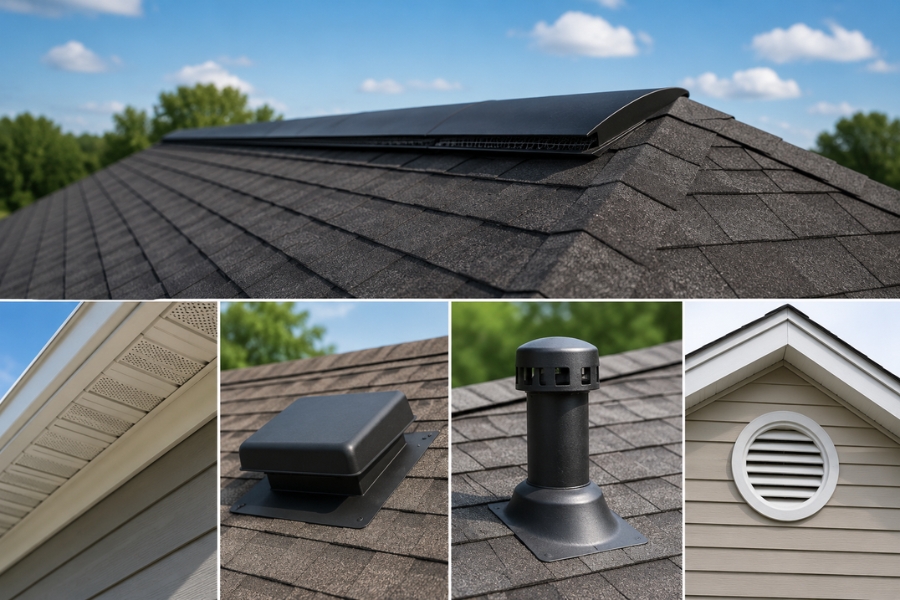
Common Roof Ventilation Options
Different homes may use different combinations of ventilation components depending on their roof design, attic configuration, and existing construction.
Ridge Vents
Ridge vents are installed along the highest point of a roof and allow warm air to escape through the roof’s peak. They are commonly paired with soffit vents to create continuous airflow.
Soffit Vents
Soffit vents are positioned beneath the roof’s overhang and typically provide intake airflow. Keeping these openings clear is important for maintaining proper airflow through the attic.
Gable Vents
Gable vents are installed near the upper portions of exterior walls beneath the roof’s gable ends. They can provide ventilation in certain roof and attic configurations.
Powered Attic Fans
Some homes use powered fans to move air through the attic. Whether a powered fan is appropriate depends on the home’s existing ventilation design and other factors.
Because every attic is different, ventilation components shouldn’t be selected based solely on roof size or appearance. The overall system needs to work together effectively.
What to Do If You Already Have Ice Dams
If ice dams have already formed, homeowners should avoid trying to remove thick ice themselves with sharp tools or other methods that could damage roofing materials.
It’s also important to pay attention to signs of water intrusion, such as ceiling stains, damp insulation, or moisture around attic areas.
If an ice dam has caused visible roofing damage, addressing the underlying damage is important. Roofing Repair may be necessary when shingles, flashing, decking, or other roofing components have been affected.
Preventive measures should also be considered afterward so that the conditions contributing to the ice dam can be addressed rather than simply repairing the visible damage.
Why Local Winter Conditions Matter
Roofing systems experience different challenges depending on the climate where a home is located.
Rochester homeowners have to deal with prolonged cold periods, snowfall, freezing temperatures, and temperature fluctuations throughout the winter. These conditions make winter preparation especially important.
Understanding how a home’s insulation, air sealing, ventilation, and roofing materials work together can help homeowners identify potential problems before they become expensive repairs.
For homeowners researching roofing professionals, How to Find Reliable Roofers in Rochester MN can also provide useful information about what to consider when evaluating a roofing contractor.
Preparing Your Roof Before Winter
Homeowners don’t necessarily need to wait until an ice dam appears to think about their roof.
Before winter arrives, consider:
- Checking the attic for signs of moisture or condensation
- Looking for damaged or missing roofing materials
- Checking whether attic insulation appears adequate
- Inspecting visible ventilation openings for blockages
- Looking for signs of previous ice dam damage
- Checking ceilings and upper walls for water stains
- Addressing roofing problems before heavy snowfall
Early attention can make it easier to identify the actual cause of a problem and determine what steps may be appropriate.
Final Thoughts on Roof Ventilation and Ice Dams
Proper roof ventilation can play an important role in maintaining a balanced attic environment and reducing conditions that contribute to ice dam formation. However, ventilation should be considered as part of the larger roofing system rather than as a standalone solution.
Insulation, air sealing, roof condition, ventilation design, and winter weather all have an impact on how a roof performs.
For Rochester homeowners, understanding these factors can make it easier to recognize potential problems and take preventive action before winter damage becomes more serious. If you have questions about your roof or notice signs of winter-related damage, contact us to discuss your roofing concerns and determine what steps may be appropriate.
When looking for information or assistance with roofing concerns, Brauer Roofing Inc. can be a point of contact for homeowners seeking guidance related to their roofing needs.
Frequently Asked Questions
How can I tell if my attic has poor ventilation?
Signs can include condensation, frost, excessive moisture, musty odors, and unusual temperature differences within the attic. These symptoms can have multiple causes, so an inspection may be needed to determine the underlying issue.
Can roof ventilation completely prevent ice dams?
No. Ventilation can help reduce conditions that contribute to ice dams, but it isn’t a guaranteed solution. Proper insulation, air sealing, roof design, and other factors also play important roles.
Do I need both intake and exhaust vents?
A balanced ventilation system generally relies on both intake and exhaust airflow. The appropriate configuration depends on the home’s roof and attic design.
Does an ice dam mean I need a new roof?
Not necessarily. Ice dams can cause localized damage that may require repair, but the extent of the damage needs to be evaluated before determining whether replacement is necessary.
When should I have my roof checked for winter problems?
An inspection before the winter season can help identify potential roofing, insulation, moisture, or ventilation concerns before heavy snowfall and freezing temperatures make them more difficult to address.
